
Locking window well covers keep a cover from being lifted off from the yard while still letting anyone inside the basement push it open. The right lock works from one side only, the inside, and releases without a key, so the well stays secure without turning an escape window into a trap.
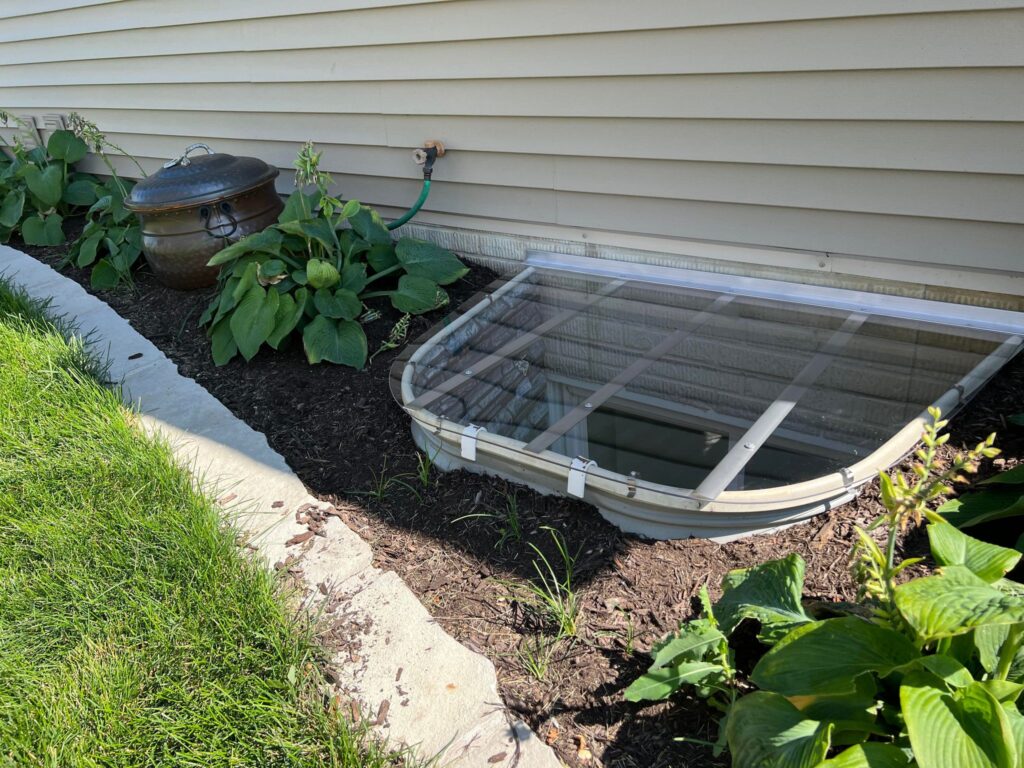
Why Lock a Window Well Cover at All?
An open window well is a weak spot. It puts a basement window below ground level, out of sight from the street and often tucked behind a fence or a row of shrubs. A cover that simply rests on top can be lifted off by anyone who walks up to it.
Locks matter for reasons that have nothing to do with burglars, too. Kids lift things. Dogs dig. A strong gust catches a loose cover and flips it into the yard. A cover that stays put protects the people and animals outside as much as the basement inside.
How Do Locking Window Well Covers Work?
CoverUp offers two ways to hold a cover to the well, and neither one fastens it to the house. Quick-release stainless steel clips hold the cover down but let it pop free when someone pushes on it from either side. An interior locking system goes a step further: from the yard the cover will not lift, and from inside the well it opens when you pull a pin out of each lock.
| Feature | Stainless steel clips | Interior locking system |
|---|---|---|
| Opens from inside the well | Yes, push up on the cover | Yes, pull the pin from each lock |
| Opens from the yard | Yes, push on the cover | No |
| Typical use | Wells you want to reach easily for cleaning | Wells where you want no access from outside |
| Attached to | The well | The well |
Both choices keep the cover completely removable in an emergency. That is the reason it attaches to the well rather than being screwed to the siding or the foundation.
Security Window Well Covers and the Egress Rule
A basement bedroom needs an emergency escape opening, and the well outside it is part of that exit path. IRC section R310 says any cover or grate over an escape well must be releasable or removable from the inside without keys, tools or special knowledge. The same section asks for at least 9 square feet of net clear area in the well, at least 36 inches in each horizontal dimension, and a permanent ladder or steps once the well is deeper than 44 inches. Requirements vary from city to city, so confirm the details with your local building department.
That rule is the line between a security cover and a hazard. A padlock, a keyed latch or a cover bolted down from outside might slow an intruder, but it could also stop a child from climbing out during a fire. CoverUp's standard egress window well cover is built to stay removable from inside, and our article on window well covers and egress code goes deeper into the code side.
Practice opening it
Whatever hardware you choose, show everyone who sleeps in the basement how it opens, and have each of them try it once in daylight. A release that feels obvious to the adult who ordered it may confuse a guest or a sleepy teenager at night.
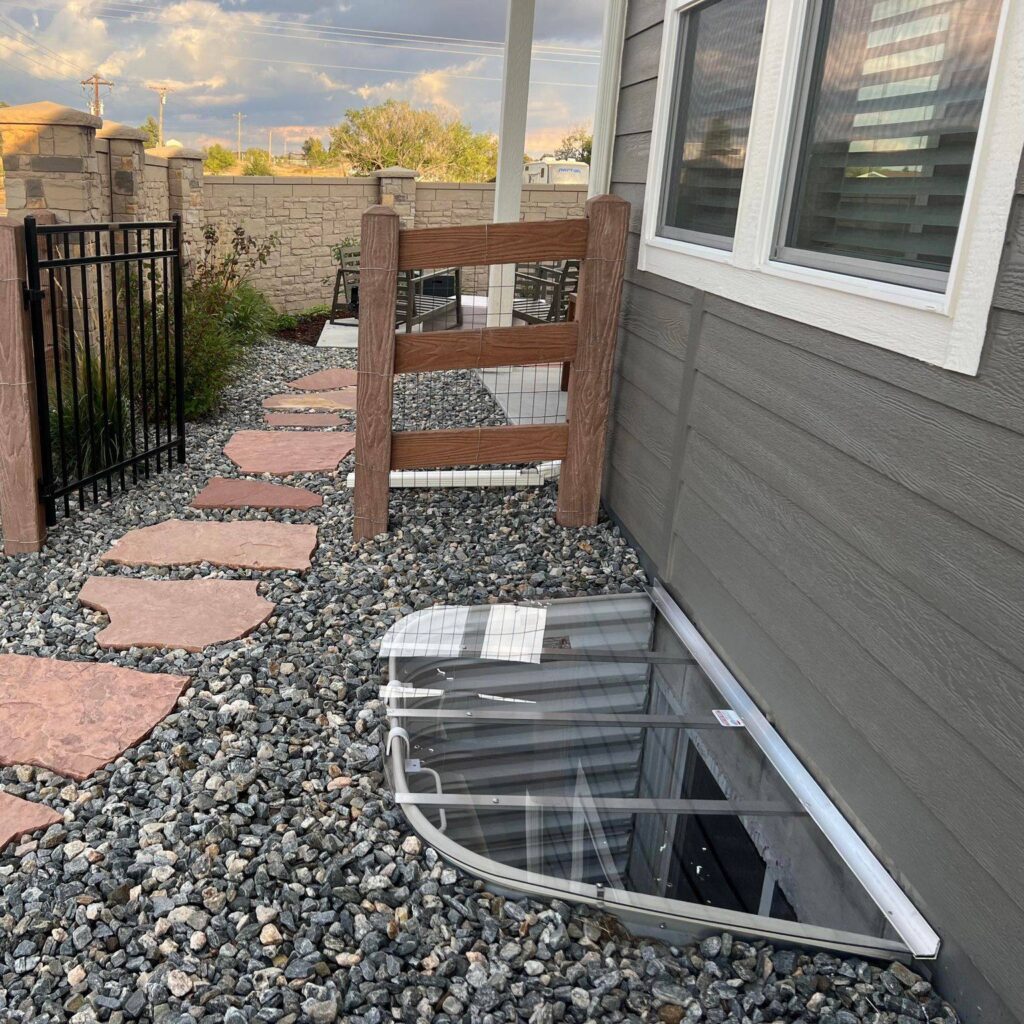
How to Secure Window Well Covers Without Trapping Anyone
- Attach the cover to the well, never to the house, so it lifts away cleanly from below
- Choose stainless hardware so clips and locks do not rust shut over the years
- Skip padlocks, chains and keyed latches on any egress well
- Keep planters, firewood and patio furniture off the top of the cover so nothing weighs it down
- Add an escape ladder if the well is deep enough to need one
- Check the hardware each spring and replace any broken clip or lock right away
CoverUp's window well accessories include escape ladders and interior locks designed to work with its covers, so the pieces are matched to your well instead of bought separately and hoped for.
Kids, Pets and Locking Covers
For families with small children, the outside matters as much as the inside. A cover that carries weight and cannot be lifted from the lawn means a child running across the yard will not end up at the bottom of a well. CoverUp's custom covers hold up to 800 lbs, so a kid standing on one, or an adult clearing snow off it, is well within the rating.
Pets are the other common reason people ask about locks. Dogs nose around wells, cats hide in them and wildlife tumbles in. A secured cover keeps all of them out, while the clear Lexan polycarbonate top still lets daylight into the basement.
Clips or a Lock: Which Should You Choose?
Start with how the well gets used. If it sits under a basement bedroom and faces an alley, a side yard or a spot nobody can see from the house, the interior lock makes sense. If the well is in a fenced backyard and you like to open it from outside to clear out leaves, clips are simpler to live with.
Many homes end up with a mix. The egress well by the bedroom gets a lock, and the small wells along the side of the house get clips. An installer can look at each one and suggest what fits.
Getting a Lock Installed
CoverUp builds each cover on site and mounts it with the system you pick during window well cover installation. Nobody has to be home for it. The crew only needs access to the yard and an outdoor electrical outlet.

Frequently Asked Questions
Can someone open an interior lock from the yard?
No. The interior locking system opens only from inside the well, by pulling a pin from each lock. No cover makes a home impossible to break into, but this one takes away the easy entry.
Are locking window well covers allowed on egress windows?
They can be, as long as the cover releases from inside without keys, tools or special knowledge. That is the general IRC requirement, so confirm the details with your local building department.
Can a lock be added to the cover I already have?
Sometimes. Locks are matched to both the well and the cover, so tell CoverUp what is installed now and they can tell you whether it will work.
To get a price on a locking cover for your egress well, call 888-267-4242 for an estimate or reach CoverUp online.
Where we install
- Window well covers in Denver
- Colorado service area
- Midwest service area
- Custom window well covers
- Cover installation
- Get a free estimate


